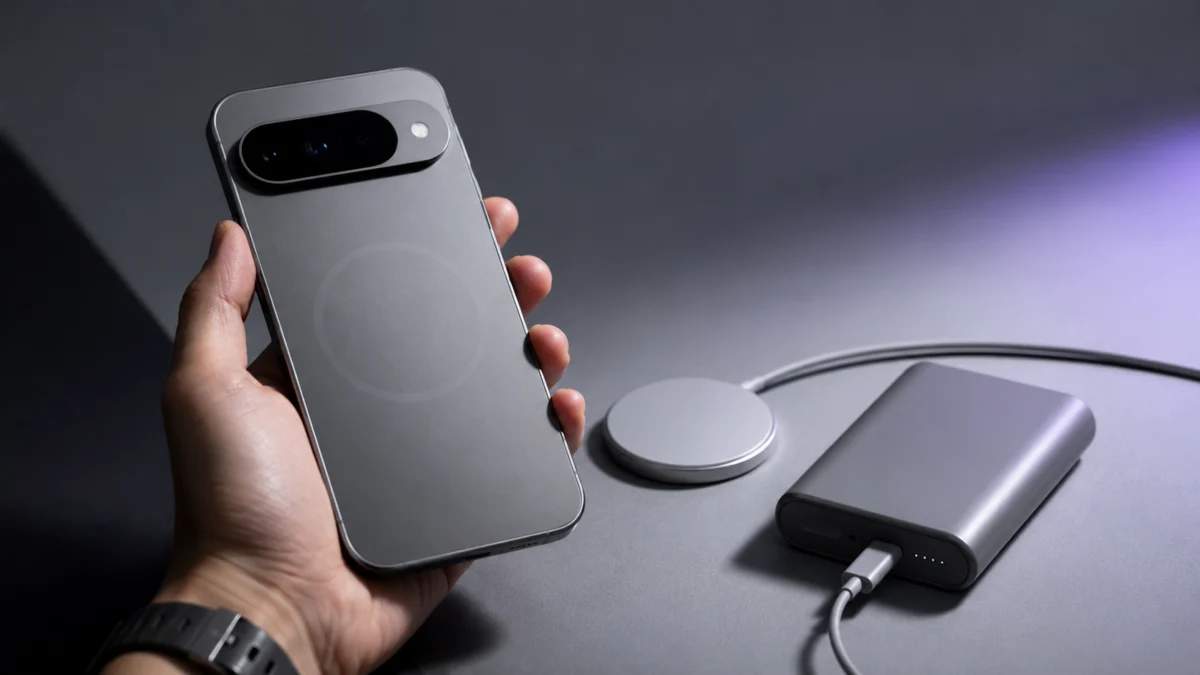
Battery Share is not a missing setting on Pixel 10 — Google has confirmed that the feature has been deliberately removed from the entire Pixel 10 lineup. This is not a bug, and it cannot be re-enabled through settings, a reset, or a software update. The removal affects every model in the series: Pixel 10, Pixel 10 Pro, Pixel 10 Pro XL, and Pixel 10 Pro Fold.
Google explained the change in a statement to the Portuguese Android publication Droidreader, citing a hardware conflict between the Qi2 magnet array and reverse wireless charging. If you upgraded from a Pixel 9, Pixel 8, or any earlier Pixel that had Battery Share, the feature will not appear on your Pixel 10 because it no longer exists on the hardware level. This article explains why, what Google said about its future, and which alternatives actually work.
Why Battery Share Is Missing on the Pixel 10 Series
Battery Share is gone from all Pixel 10 models because of a direct hardware conflict with Qi2 magnetic wireless charging. Google’s official statement, reported by 9to5Google and Android Authority, explained the situation clearly: the array of magnets built into the Pixel 10 to enable Qi2 magnetic alignment “creates a strong connection with the charger but presents a physical limitation for reverse wireless charging.”
In plain terms, the same magnets that let you snap a Pixelsnap charger or a MagSafe puck onto the back of your Pixel 10 also prevent the phone from pushing power outward through that same surface. The Qi2 magnet ring and the reverse wireless charging coil cannot work together in the current hardware design.
Google added that Battery Share is “not currently available” on the Pixel 10 and that the company is “constantly exploring future innovations to improve the Pixel experience.” That phrasing leaves the door open for a future model to bring the feature back, but it is not a commitment, and it does not apply to any existing Pixel 10 device through software.
Battery Share first appeared on the Pixel 5 in October 2020. It allowed users to wirelessly charge earbuds, a smartwatch, or another phone at up to 5W by placing the device on the back of the Pixel. The feature appeared on every main Pixel lineup from Pixel 5 through Pixel 9. The Pixel 10 generation is the first to launch without it.
Qi2 and Pixelsnap: What Changed From Older Pixel Phones
The Pixel 10 series introduced two things that did not exist on older Pixel phones: native Qi2 magnetic wireless charging and Google’s own magnetic accessory system, called Pixelsnap. Understanding these two changes explains why Battery Share is no longer part of the package.
What Qi2 brings to Pixel 10. Qi2 is a wireless charging standard developed by the Wireless Power Consortium that incorporates a ring of alignment magnets into the phone. Those magnets ensure that a compatible charger snaps into the correct position over the charging coil every time, rather than relying on manual alignment. The result is more consistent charging efficiency and less heat wasted during each session. The Pixel 10, Pixel 10 Pro, and Pixel 10 Pro Fold charge at up to 15W over Qi2. The Pixel 10 Pro XL uses the newer Qi2.2 profile and reaches up to 25W wirelessly.
What Pixelsnap is. Pixelsnap is Google’s branded magnetic accessory ecosystem for the Pixel 10 series, designed to work like Apple’s MagSafe. Because the Pixel 10 has Qi2 magnets built in, Pixelsnap accessories and MagSafe accessories both attach to the back of the phone and align automatically. Google launched three first-party Pixelsnap accessories alongside the Pixel 10: a wireless charging puck, a charging puck with a desk stand, and a ring stand for grip and propping without charging.
Why they conflict with Battery Share. Battery Share requires the phone’s wireless charging coil to transmit power outward. Qi2 requires that same coil — and the magnetic array around it — to receive power inward. The magnets that make Qi2 alignment possible interfere with the hardware configuration needed to run the coil in reverse. Google has confirmed this is a physical limitation, not a software one.
One point worth noting: HMD’s Skyline smartphone is also Qi2-certified and has magnets on the back, yet it still supports 5W reverse wireless charging. Google has not explained why its Pixel 10 hardware cannot do the same. What is confirmed is that the Pixel 10’s current hardware design makes Battery Share and Qi2 incompatible, and Google has not committed to resolving this on any existing Pixel 10 model.
Can You Enable Reverse Wireless Charging With a Setting or Update?
No. Battery Share cannot be enabled through settings on any Pixel 10 model. The toggle that appeared in Settings → Battery → Battery Share on Pixel 9 and earlier phones is not present in the Pixel 10 settings menu because the underlying hardware no longer supports it.
The following actions will not bring back Battery Share on any current Pixel 10 device:
- Searching for Battery Share or wireless power share in the settings app
- Removing the phone case or using the phone without any accessories
- Resetting network settings or performing a factory reset
- Enabling or disabling developer options
- Installing a system or security update
- Reverting to an earlier Android version
Google’s statement specifically described Battery Share as “not currently available” on Pixel 10 and said the company is exploring future improvements to the Pixel experience. That language refers to future hardware generations, not to a software fix for existing Pixel 10 devices. No update has been announced or confirmed that would restore the feature on the current lineup.
If you found Battery Share in a screenshot or video from a Pixel 9 or earlier Pixel and expected to see it on your Pixel 10, that content predates the Pixel 10 generation. The feature is present on older models but does not carry over.
Model-by-Model Check: Pixel 10, Pixel 10 Pro, Pro XL, and Pro Fold
Battery Share is not available on any Pixel 10 model. The table below shows what wireless charging each device does support.
| Model | Battery Share | Qi2 Wireless (Inbound) | Pixelsnap Compatible |
|---|---|---|---|
| Pixel 10 | Not available | Up to 15W (Qi2) | Yes |
| Pixel 10 Pro | Not available | Up to 15W (Qi2) | Yes |
| Pixel 10 Pro XL | Not available | Up to 25W (Qi2.2) | Yes |
| Pixel 10 Pro Fold | Not available | Up to 15W (Qi2) | Yes |
The Pixel 10 Pro XL is the only model to support the faster Qi2.2 charging profile at 25W. All other Pixel 10 models cap at 15W over Qi2. None of the four models support outbound wireless charging in any form.
For context, the Pixel 9 series that preceded these devices all included Battery Share. The feature appeared in the charging section of Settings and allowed outbound 5W wireless charging to other Qi-compatible devices placed on the back of the phone. That capability does not exist anywhere in the Pixel 10 hardware.
Reports from the Google Pixel Community and user discussions since the Pixel 10 launch in August 2025 confirm that many upgraders from Pixel 9 discovered the missing feature only after receiving their new device. The absence was not highlighted during Google’s launch event and was only formally confirmed when Droidreader asked Google directly after noticing Battery Share was missing from the official specs pages.
What to Use Instead: Qi2 Chargers, Pixelsnap Accessories, and USB-C Power
Battery Share was most commonly used to top up wireless earbuds or provide a small emergency charge to another phone. If that describes how you relied on the feature, the following alternatives address each scenario.
Pixelsnap accessories for desk and nightstand charging. If you want reliable wireless charging for your Pixel 10 at home or at a desk, Google’s own Pixelsnap lineup is the most straightforward option. The Pixelsnap Charger attaches magnetically to the back of the phone and delivers up to 25W on the Pixel 10 Pro XL, and up to 15W on the Pixel 10, 10 Pro, and 10 Pro Fold. The Pixelsnap Charger with Stand adds a dock so the phone sits upright while charging, which also activates a display mode showing the clock, weather, and smart home controls. Both are available from the Google Store.
Third-party Qi2 chargers for broader compatibility. Because the Pixel 10 series uses the standard Qi2 protocol, any Qi2-certified charger from another brand will work with the phone and provide the same magnetic snap alignment. This also means MagSafe chargers designed for iPhone are physically compatible, though charging speeds depend on the specific charger and model combination. A standard Qi2 puck from most major accessory brands will charge the Pixel 10 and Pixel 10 Pro at up to 15W.
Related: Best Qi2 Wireless Charger for iPhone and Android in 2026
/
Related: Best Qi2 Car Chargers for iPhone
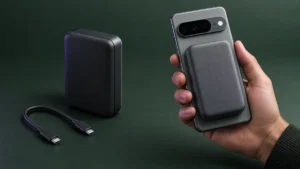
USB-C power banks for charging other devices on the go. If you previously used Battery Share to charge earbuds or another phone away from a wall outlet, a USB-C power bank with a USB-C output cable is the most direct replacement. This approach provides more control over charging speed than Battery Share’s fixed 5W output and can charge devices that do not support wireless charging at all. Most current earbuds cases and phones charge over USB-C, making a compact power bank a practical substitute for what Battery Share offered in critical situations.
A note on Pixelsnap and charging other devices. Pixelsnap accessories are designed to charge your Pixel 10, not to transmit power from your Pixel 10 to other devices. The magnetic system replaces the Qi2 alignment experience for inbound charging, not the outbound Battery Share function. Attaching a Pixelsnap accessory to the back of the phone will not enable reverse wireless charging.
How We Researched
This article is based on Google’s official statement regarding Battery Share, published by Droidreader and reported by 9to5Google and Android Authority in August 2025, as well as Google’s official Pixel 10, Pixel 10 Pro / Pro XL, and Pixel 10 Pro Fold specs pages and charging support documentation. Charging speed figures are drawn from Google’s hardware tech specs support page and the Google Pixel Community. Pixelsnap product details are sourced from Google’s official launch blog post. We have not conducted hands-on testing of any Pixel 10 model. Any references to user reactions or community confusion are based on confirmed reports from the Google Pixel Community and tech media coverage of the Pixel 10 launch period.
The Bottom Line
Battery Share is not coming back to Pixel 10 through a software update, a settings toggle, or a case removal. Google has confirmed the removal is a hardware-level decision tied to the Qi2 magnet array built into all four Pixel 10 models. The feature worked on every Pixel from Pixel 5 through Pixel 9, but the design change required to support Qi2 and the Pixelsnap accessory ecosystem made it incompatible with the current generation.
If Qi2 magnetic charging and the Pixelsnap accessory ecosystem are useful to you, the trade-off may be worth it. If you relied on Battery Share regularly — for charging earbuds or sharing power in a pinch — a USB-C power bank provides a more reliable and faster alternative than the original 5W Battery Share output ever did.